

Product Features
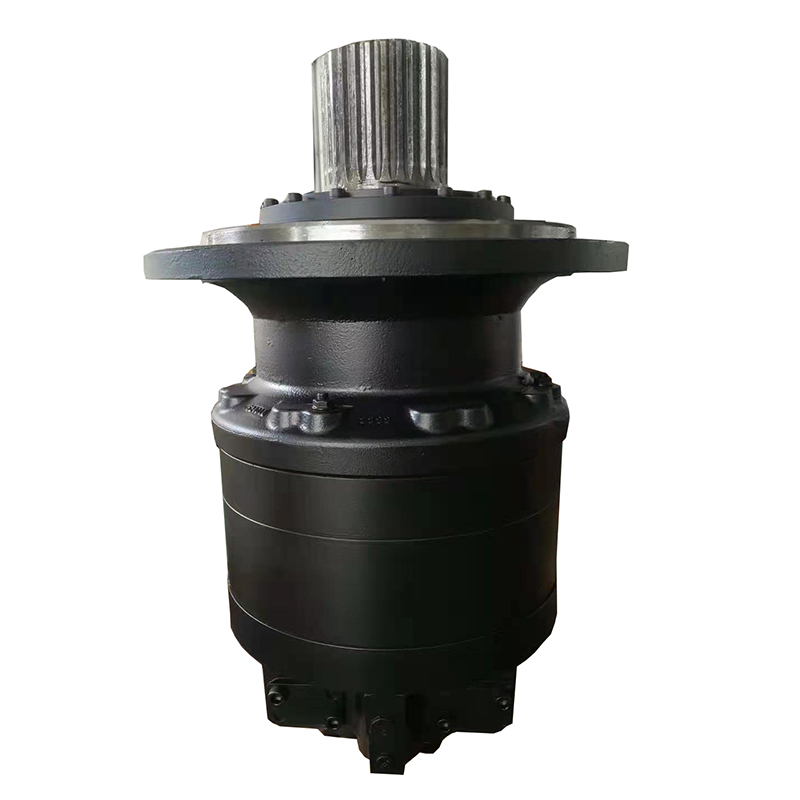
The YMS hydraulic motor is an internal-curve, multi-acting radial piston motor. Its main features are as follows:
Modular Design: The overall structure adopts a modular design with a chip-type stacking configuration. It is divided into four parts: the mechanical output module, hydraulic function module, flow distribution module, and mechanical braking module. This design facilitates compatibility with various mainstream optimized supporting systems.
High Efficiency: It adopts flat valve flow distribution technology, which has low sensitivity to pressure and temperature. This technology automatically compensates for wear between the flow distribution friction pairs, ensuring the motor maintains high volumetric efficiency for a long time. Meanwhile, the adoption of a roller-plunger structure simplifies the force transmission mechanism and improves mechanical efficiency.
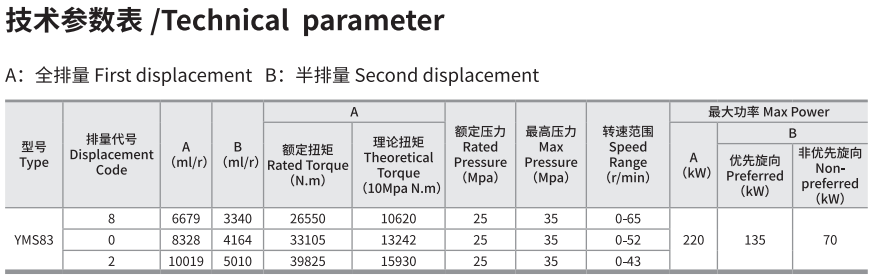
High Operating Pressure and Excellent Low-Speed Performance: The stator curve design has been optimized to ensure output torque and stable rotational speed while reducing stator contact stress. Additionally, the stator is manufactured using new materials and advanced processes, significantly increasing the hydraulic motor’s operating pressure—with a maximum pressure of up to 40 MPa. Owing to the low inertia of the force transmission mechanism, the plunger pair equipped with a sealing piston ring, and the roller stopper made of anti-friction material, the motor achieves high starting efficiency and excellent low-speed performance.
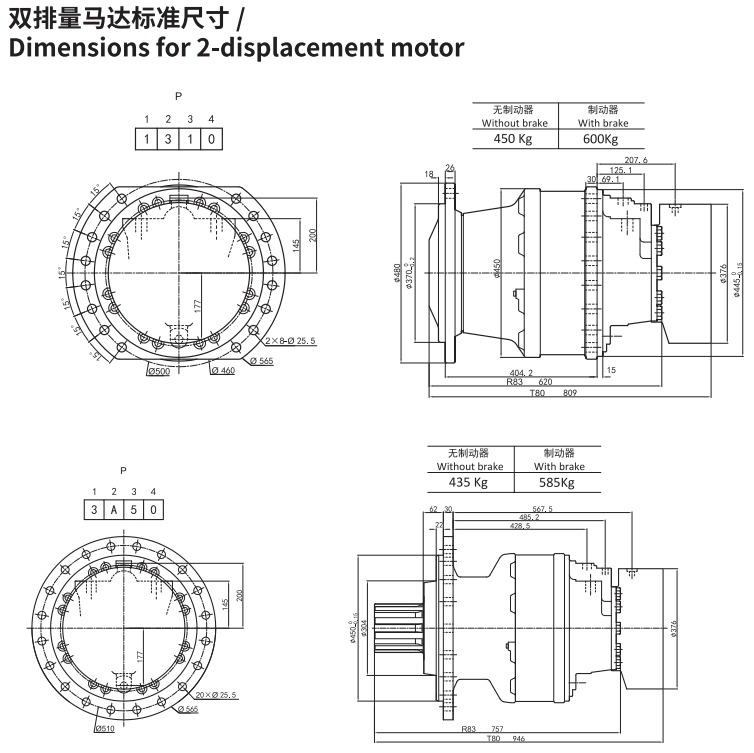
Capability to Withstand Radial and Axial Loads: With an independently configured mechanical output module, as well as a large-diameter output shaft and bearings, the motor can withstand large axial and radial forces. It can be directly connected to a gear output or installed directly on the drive wheel of a vehicle.
Optional Mechanical Brake: It adopts a modular chip-type structure, allowing the integration of a mechanical braking device to achieve direct and safe service braking and parking braking of the output shaft.
Motor Displacement Control: Motors are available in two types: single-displacement motors and double-displacement motors. Single-displacement motors output full displacement, while double-displacement motors can switch between full-displacement and half-displacement output via control valve regulation to achieve speed control.