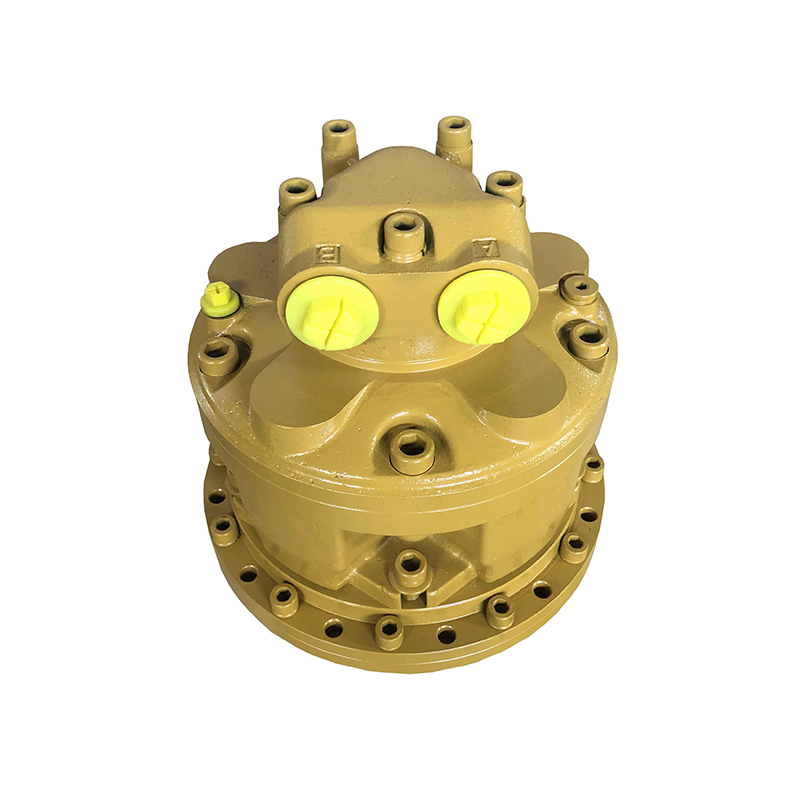


Why Does the Fixed Rotor Pair of a Gerotor Hydraulic Motor Rotate in Reverse?
The fixed rotor itself is correct; the issue arises from the incorrect relative position between the rotor and the port plate. Cycloidal hydraulic motors are divided into two types based on their oil distribution methods: shaft oil distribution and end-face oil distribution.
For the shaft oil distribution type, the oil distribution mechanism is located on the main shaft. You can make a mark on the end cover aligned with an oil groove, then align this mark with the minimum sealed cavity of the fixed rotor pair for testing. If the motor still rotates in reverse, simply adjust it by one additional tooth (i.e., misalign it by one more tooth) to resolve the issue.
For the end-face oil distribution type, the oil distribution is achieved via a port plate. The hydraulic motor of a roadheader is connected to the rotor through an oil distribution shaft. After installing the fixed rotor pair properly, you only need to measure the depth of the sealed cavity: if the clockwise-side cavity of the minimum sealed cavity is deeper than the counterclockwise-side one, the motor rotates forward; otherwise, it rotates in reverse.
The total depth of the cavity is the sum of the thicknesses of the fixed rotor, baffle, and port plate. The key cause of reverse rotation lies in the port plate. Generally speaking, when the port plate feeds oil from the side and the oil is just directed to the clockwise-side cavity (high-pressure cavity) of the minimum sealed cavity of the fixed rotor pair (as noted by hydraulic motor manufacturers), the motor rotates forward.